The Four Boards You Will Actually Choose From
KT board, PVC foam board, PP hollow sheet and acrylic cover the great majority of display work. Rigid polystyrene sheet and aluminium composite panel sit at the edges: PS when you want acrylic-like stiffness indoors for less money, ACP when the sign is architectural rather than promotional.
- KT board: cheapest and lightest, indoor only, life measured in months.
- PVC foam board: the general-purpose board. Waterproof, machinable, indoor and outdoor.
- PP hollow sheet: very light, waterproof, cheapest per square metre outdoors, but the flutes show.
- Acrylic: the premium face. Clear, mirror or coloured, laser-cut and polished.
- Rigid PS sheet: acrylic-like stiffness at lower cost, brittle when cold.
- ACP: metal-skinned panel for facades and large outdoor signs, not a print board.
Comparison Table
Nine properties, six boards. The last column is an index with PVC foam board set at 100, so you can see relative cost without chasing local price lists.
| Board | Core | Thickness | Weight, kg/m2 | Waterproof | Direct print | Cutting | Outdoor life | Cost index |
|---|
| KT board | PS foam, paper or PS facing | 3-10 mm | 1.2-1.6 (5 mm) | No | No, mount or laminate | Knife, saw | Indoor, 3-6 months | 55 |
|---|
| PVC foam board | PVC foam, celuka or co-extruded | 1-30 mm | 2.5-3.5 (5 mm) | Yes | UV, screen, eco-solvent | Knife, saw, CNC, laser | 2-3 years | 100 |
|---|
| PP hollow sheet | Twin-wall fluted PP | 2-10 mm | 0.7-0.9 (4 mm) | Yes | UV with corona treatment | Knife, saw, die-cut | 1-2 years | 70 |
|---|
| Acrylic, cast | Solid PMMA | 1.5-25 mm | 5.9 (5 mm) | Yes | UV with white ink, or vinyl | Laser, CNC, scoring | 5+ years | 420 |
|---|
| Rigid PS sheet | Solid polystyrene | 1-6 mm | 5.2 (5 mm) | Yes | Screen, UV | Knife, saw | Indoor only | 130 |
|---|
| ACP | PE core, 0.3 mm aluminium skins | 3-6 mm | 4.5-5.5(3-4 mm) | Yes | UV, vinyl wrap | Saw, router | 10+ years | 260 |
|---|
Weights are indicative for the thickness shown. Cost index compares list prices per square metre, not per sheet, and will move with local freight and currency.
KT Board: the Cheap One, and Where It Stops Working
KT board is a polystyrene foam core laminated between two paper or thin PS facings. It is the default exhibition panel across Asia, where the name comes from the Korean origin of the format, and it is sold as foam board or foamboard in most other markets.
- Strengths: about 1.4 kg/m2 at 5 mm, the cheapest board per square metre, cuts with a knife, and takes mounted prints and vinyl cleanly.
- Limits: the paper facing absorbs moisture. In a humid exhibition hall or an unventilated container it warps and the facing lifts.
- No structural use: screws pull through the foam, and a 1.2 x 2.4 m sheet standing free bows within days.
- Exposed cut edges dent, so plan the trim before you cut.
The right job is a one-off exhibition graphic, a mounted poster, a model, or point of sale for a campaign measured in weeks. An outdoor banner mounted on KT board will delaminate in about a week, and no amount of lamination on the print will save the board.
PVC Foam Board: sintra, forex, celuka
PVC foam board is a foamed rigid PVC sheet, usually co-extruded with a denser skin on both faces. Density runs from 0.40 to 0.80 g/cm3. The higher the density, the better it holds a screw, the less it dents, and the more it costs.
One product, six names
US buyers ask for sintra, which is a brand. UK buyers ask for forex. Extruders call it celuka board after the process. Chinese factories call it xuefuban or andiban. German speakers ask for Hartschaumplatte. These are one material family, foamed rigid PVC, and the grade difference inside that family (density, skin quality, whiteness) matters far more than the name.
What it does well
- Waterproof: it does not absorb water, so it works outdoors and in wet or humid rooms.
- Machinable: saw, route, drill and tap it. Screws hold reliably above about 0.55 g/cm3.
- Thermoformable: heat-bendable into radius corners and three-dimensional letters at roughly 100-130 C.
- Printable: direct UV and screen printing both adhere well to the extruded skin.
Where it fails
It creeps under sustained load, so a 2 m shelf will sag over months even though it feels rigid on day one. Sheets under 3 mm are flexible and need a frame. Cheap low-density board dents easily, which matters for anything the public handles. For a sign that is installed once and never touched, low density is fine; for a menu board wiped daily, specify 0.55 g/cm3 or above.
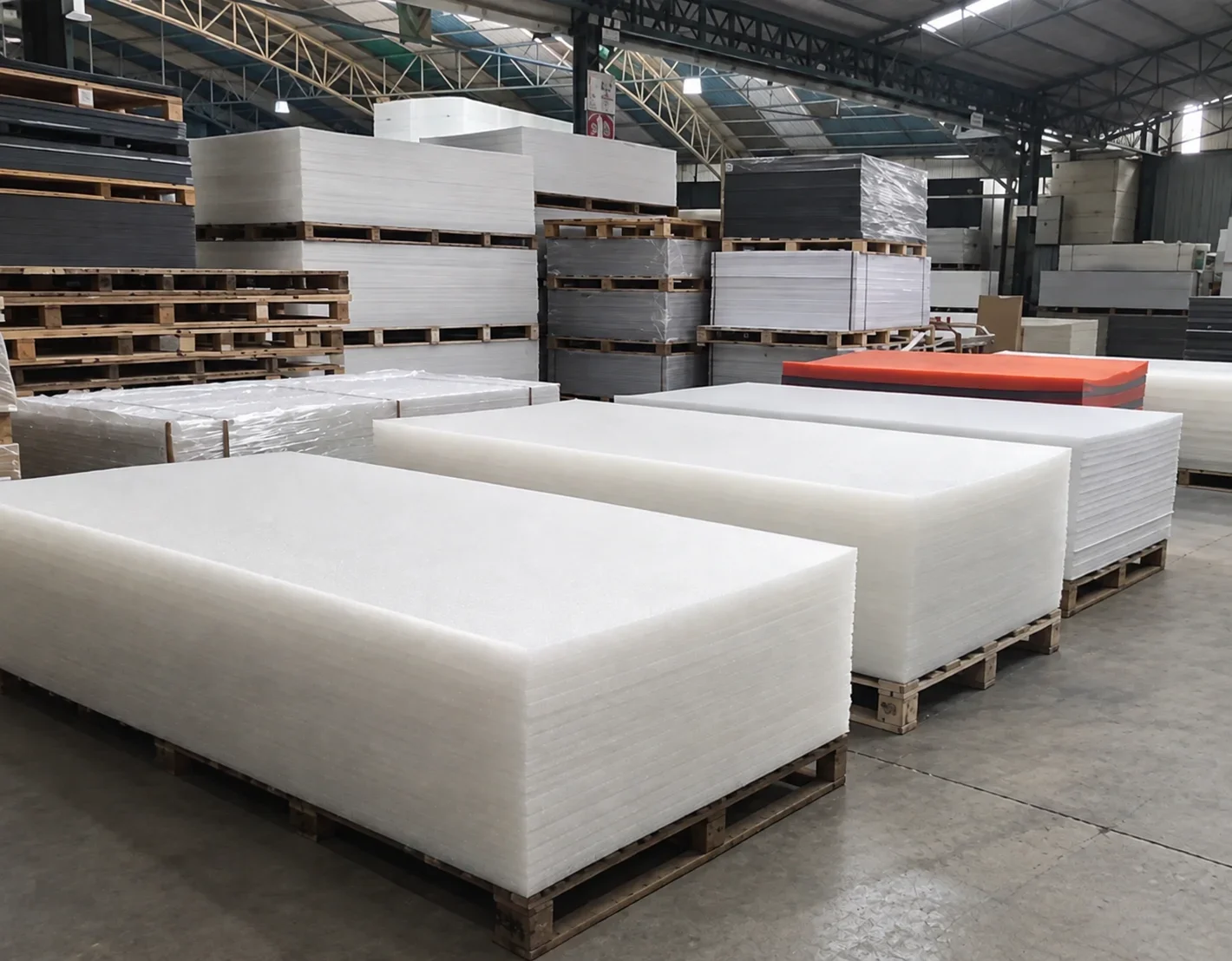
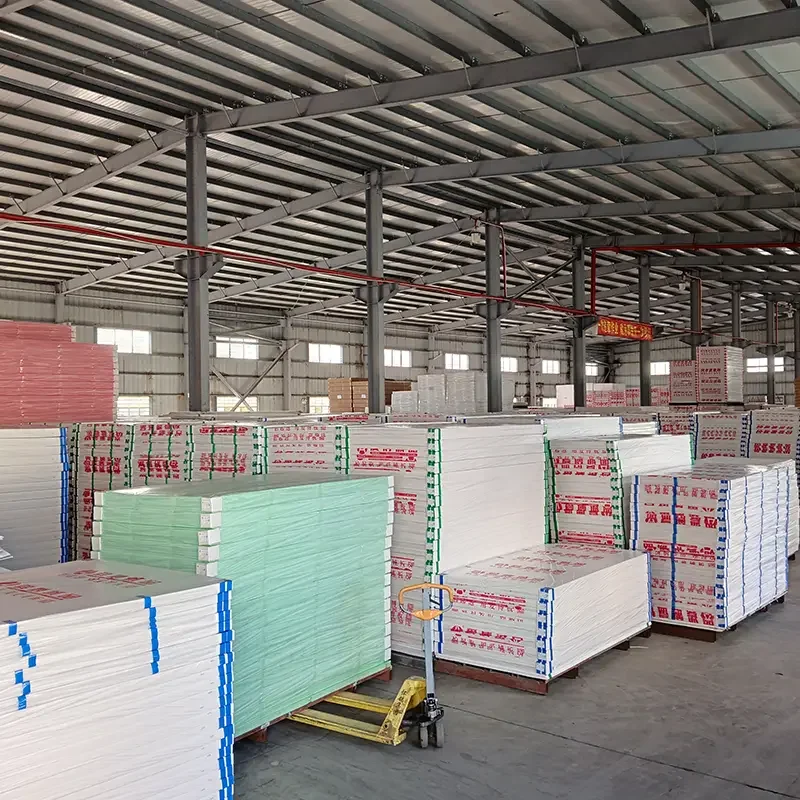
PVC foam board rangePlastic sheet range
PP Hollow Sheet: Light, Cheap, and Honest About Its Limits
PP hollow sheet is a twin-wall extrusion: two flat skins joined by vertical ribs. Trade names are coroplast and corrugated plastic. At 4 mm it weighs around 0.8 kg/m2, roughly a third of a PVC foam board of the same size.
- Waterproof and chemically inert, which is why it is the standard board for site hoarding, yard signs and political campaign boards.
- Direct print shows the flutes. The surface is not flat across the ribs, so fine type and smooth gradients band. Corona treatment or a printable-skin grade helps, and vinyl applied over the face hides it completely.
- Rigid across the flutes, flexible along them. Decide the flute direction before cutting, because a 1.2 m span along the flutes will flop.
- Heat-sensitive: dark colours in direct summer sun soften and bow. Keep an expansion gap at the frame.
- Best value outdoors for 12 to 24 months, and the right answer when the sign is temporary and large.
PP hollow and plastic sheets
Acrylic Sheet: When the Face Is the Product
Acrylic, or PMMA, is the premium display face: clear, opal, mirror or solid colour, from 1.5 to 25 mm. Cast sheet machines and polishes cleanly and is the grade to specify for cut letters and routed edges. Extruded sheet is cheaper and better suited to straight cuts and large flat panels.
- Laser cutting gives a polished edge with no secondary finishing, which is why most premium signage is acrylic rather than PS or PVC.
- It is brittle under impact and scratches visibly. Anything the public handles needs either care or a sacrificial vinyl layer.
- Thermal expansion is high. Leave clearance in frames and do not over-tighten fixings, or the sheet will craze at the hole.
- Cost is roughly four times PVC foam board per square metre, and the gap widens with thickness.
- For a light box face, use opal diffuser grade rather than clear sheet. Clear acrylic shows every LED as a bright dot.
Acrylic sheet rangeLaser cutting materials
PS Sheet and ACP: the Two Edge Cases
Rigid polystyrene sheet sits between KT board and acrylic. It is stiffer than KT, cheaper than acrylic, waterproof, and it takes screen printing well. It is also brittle: it cracks at fixing holes and in cold weather. It is a good indoor substitute for acrylic wherever the edge finish is not being judged.
Aluminium composite panel is a polyethylene core between two thin aluminium skins. It is a cladding and facade material: rigid, flat, weatherproof for a decade, and the standard substrate for large outdoor signs and petrol station fascias. It is not a print board. The print goes on cast vinyl applied to the face, or on a UV-printed skin, and the panel is cut and folded on a router or a panel saw.
Signage materialsExhibition display systems
A Short Decision Order
Four questions in this order will settle almost every job, and they are worth asking before anyone quotes.
- Will it get wet or sit outdoors? If yes, KT board is out immediately.
- How long must it last? Under three months indoors, KT board or PP hollow. One to three years, PVC foam board. Five years or a permanent installation, acrylic or ACP.
- Does it carry a screw, a hinge or a load? Then PVC foam board at 0.55 g/cm3 or above, or ACP. Never KT board.
- Is the edge or the face being judged close up? Then acrylic, because the polished laser edge is the finish.